BREAKING NEWS

BREAKING NEWS ""**Banks will remain closed from 2nd to 4th March 2026

VISITOR FROM WORLD

Free counters!

YOU ARE VISITOR

Blog Archive

LIVE

BREAKING NEWS ""**If we want PSU bank to compete with Pvt bank ---Give them a break Saturday first****Outcome of Today’s meeting with IBA - 31.01.2023*********

Sunday, June 7, 2020

we don't need retired leader to lead new generation employees. Regards,

From so many years *Bank of Baroda* is led by union leaders who claim themselves leaders of Majority unions are RETIRED from bank's service many years back. Some of them are *Mr.Milind Nadkarni,* *Mr.K.K.Nair and the UFBU chairman AIBEA GS C.H.Venkatchalam.*
These retired leaders are. ONLY responsible for the delayed wage revision, bad Pramotion Policies, Wrong transfer policies etc.
*Mr.Vinod Nikam, G.S OF AIBOBKSENA* is the ONLY working GENERAL SECREATARY in Bank of Baroda. These retired leaders don't know the current problem of employees and also Banking Industry as a whole.
Now we have to throw these retired leaders out from all unions. Hence please vote on below given link.
We will unitedly show them we don't need retired leader to lead new generation employees.
Regards,
*One Frustrated Barodian*

Karnataka Bank reports ₹285-cr. fraud

Private sector lender Karnataka Bank has reported to the RBI that it has been defrauded of more than ₹285 crore consequent to loans to four entities, including DHFL, gone bad.
A total of ₹285.52 crore has been reported as fraud wherein the bank was one of the consortium lenders during 2009 to 2014 to Dewan Housing Finance Corporation Ltd. (DHFL), Religare Finvest, Fedders Electric and Engineering Ltd. and Leel Electricals Ltd, Karnataka Bank said.
The maximum is owed by DHFL at ₹180.13 crore, followed by Religare Finvest ₹43.44 crore, Fedders Electric ₹41.30 crore and Leel Electricals ₹20.65 crore, the bank said.

Saturday, June 6, 2020

After 11 bank staff die, employees ask govt. for transport, insurance

With at least 11 bank employees losing their lives to COVID-19 in Mumbai and adjoining areas, bank unions have demanded transportation for staff and implementation of safety measures.
In a communication to the Ministry of Finance, the United Forum of Bank Employees (UFBU) — the umbrella body of nine bank unions — said most bank employees working in branches in Mumbai live in the suburbs, and many commute from beyond city limits.
Banks are not providing any conveyance facility to these employees and public transport such as local trains and Metro rail services is shut. BEST bus services have a low frequency, while State transport is not allowing bank employees to use its services, saying they are not covered under essential services.
In addition, the letter said, most banks have discontinued posting guards at the entrance and do not have permanent sweepers, and thus security and cleanliness are also compromised. Banks are unable to regulate customer traffic at the entrance, which has resulted in great risk to employees' lives.
“Further, the government has not extended insurance cover of ₹50 lakh to bank employees on a par with government employees, and different banks are following different policies of compensation in case of death due to COVID-19,” said Devidas Tuljapurkar, convener, UFBU, Maharashtra.
The union demanded that the government arrange safe transportation for employees, and ensure branches are sanitised regularly and entry is regulated. They have also demanded better security arrangements.
It said branches may operate with 50% staff with alternate day attendance and the remaining be allowed to work from home. Employees above the age of 50 and women staffers should be given preference to work from home, as well as employees with diabetes, blood pressure and chronic ailments.
“The employees attending the duties be paid Rs. 1,000 per day as discomfort allowance for the days for which they are attending,” the letter said.

Trade unions call for nationwide protest on July 3 against changes in labour laws and privatisaion

A joint forum of 10 central trade unions have called for another round of nationwide protest on July 3, second in less than two months, demanding immediate halt to changes in labour laws and government’s aggressive privatisation drive. A decision to this effect was taken at the meeting of the central trade unions (CTUs) June 3, 2020.

These unions had last held such a protest on May 22 alleging that the government failed to protect the rights of the workers during the nationwide lockdown ..since March 25 to prevent the spread of Covid-19.

According to the joint statement issued by the unions on Friday, the upcoming protest on July 3 is in preparation and prelude to further united struggle of prolonged non-cooperation and defiance of the government of India through its anti-people, anti-national policies.

The 10 trade unions include Ten central trade unions the Congress-backed INTUC, Left’s CITU and AITUC and others like AIUTUC, TUCC, HMS, SEWA, LPF, AICCTU and UTUC.

Even the RSS -affiliate trade union Bhartiya Mazdoor Sangh has called for a secodn round of nationwide agitation on June 10 of all its units associated with the public sector in protest against the government’s mega privatisation plan. The first such strike of BMS during the lockdown was held on May 20.

Besides, the trade unions have demanded that the government immediately convene the long overdue Indian Labour Conference to dwell upon the 12 point charter of demands, the labour and trade union rights, issues of job losses, wages, job security, the migrant workers’ issues including their journey to home and return journey to those who desire to join back their work, instead of frequently meeting only the employers and corporates organisations.

We reiterate that the central government chose the cover of COVID-19 lockdown to push through its agenda of disinvestment and wholesale privatisation of public sector enterprises,” it said, urging all sections of workers to join the protest on July 3.


Friday, June 5, 2020

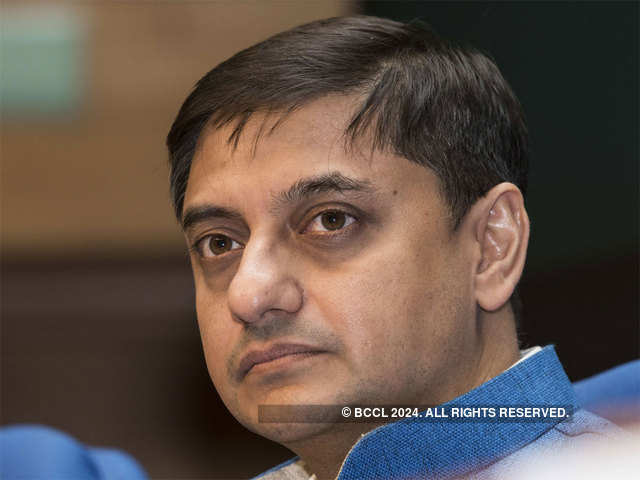
Govt 'clear and unapologetic' about privatisation of PSUs: Sanjeev Sanyal

Policy
  • Increase Font
  • Decrease Font
  • Save News
Cancel
SHARE THIS NEWS
Cancel

Govt 'clear and unapologetic' about privatisation of PSUs: Sanjeev Sanyal

PTI | 
Govt 'clear and unapologetic' about privatisation of PSUs: Sanjeev Sanyal
BCCL
He said that the Essential Commodities Act was considered as the "holiest of holy law and it was one of the 10 commandments" but the government has now changed it.
The government is clear and unapologeticabout privatisation of public sector enterprises as part of reforms, Principal Economic Advisor Sanjeev Sanyal said on Friday. Last month, Finance Minister Nirmala Sitharaman had announced that there will be a maximum of four public sector companies in strategic sectors while state-owned firms in other segments will eventually be privatised. 

This will be part of a new coherent Public Sector Enterprises Policy to be formulated to push reforms in central public sector enterprises (CPSEs), she had said while announcing the fifth and last tranche of over Rs 20 lakh crore 'Amtmanirbhar Bharat Abhiyan' package. 

Talking about the Centre's privatisation drive, Sanyal said, "...we know that privatisation is difficult to do under these circumstances, but we want to be absolutely clear and unapologetic about what we want to do. All non-strategic PSUs (public sector undertakings) will be sold when we can do it. It's not lack of intent that will hold us back." 

He further said that the Essential Commodities Act was considered as the "holiest of holy law and it was one of the 10 commandments" but the government has now changed it. 

"Labour laws and others in 10 commandments, we are going to change it. We are changing it in a very peculiar way. We are actually going to tighten safety and working condition laws. We are actually introducing nationwide minimum wages. So it's not entirely as some people may claim tilted against the labour," he said. 

The government is open to various suggestions including from labour unions to make laws more robust, he said while addressing a virtual AIMA event. 

Earlier this week, the Union Cabinet approved an amendment to the six-a-and-half decade old Essential Commodities Act to deregulate food items, including cereals, pulses and onion, a move that will transform the farm sector and help raise farmers' income. 

The Cabinet also approved 'The Farming Produce Trade and Commerce (Promotion and Facilitation) Ordinance, 2020' to ensure barrier free trade in agriculture produce. 

The government also approved 'The Farmers (Empowerment and Protection) Agreement on Price Assurance and Farm Services Ordinance, 2020' to empower farmers to engage with processors, aggregators, wholesalers, large retailers and exporters. 

Asked about steps to boost demand, Sanyal said the government is cognisant of the situation and as and when need arises, resources will be utilised to support it. 

"I can assure you that we watch this very carefully and will be willing to use whatever space we have. As I said, we have some fiscal space, when we have quite a lot of monetary space. And there are other measures as well that can be thought of. We will do it when necessary," he said. 

Citing an example, he said, a large pipeline of investment in infrastructure projects is planned for boosting demand and creating employment. 

"It is a good opportunity. As we lower the cost of capital and with global capital being as cheap as it is, there is a case for putting together a pipeline of large investment projects. So, there are ways of doing this. Demand is not only about reviving consumption. The investment is an important part of building the cycle," he said. 

Under the privatisation policy, a list of strategic sectors will be notified where there will be at least one and a maximum of four public sector enterprises, apart from private sector companies. 

In other sectors, CPSEs will be privatised depending upon the feasibility. 

The finance minister had last month said the government would announce a PSE policy as a self-reliant India needs a coherent policy. All sectors will be opened to private sectors also. 

"PSEs will continue to play an important role in defined areas. We need a coherent policy because sometimes you open up some sectors in piecemeal... Now we shall define the areas...where their presence will be impactfully felt," Sitharaman had said. 

The policy to privatise public sector companies is expected to give a boost to the government's disinvestment programme. 

The Centre has set a budget target of Rs 2.10 lakh crore from disinvestment in the current fiscal, of which Rs 1.20 lakh crore is expected from CPSE disinvestment.

Thursday, June 4, 2020

BMS to organise nationwide protest on June 10 against privatisation

The Bharatiya Mazdoor Sangh (BMS), the labour wing of the Rashtriya Swayamsevak Sangh (RSS), will organise a nationwide protest on June 10 against the central government’s plan of privatisation in various sectors.
On Thursday, the BMS, which had earlier pushed the Narendra Modi-led government to prevent states from pushing changes in the labour laws, criticised the move to commercialise the coal sector; corporatisation of the defence ordnance factories board and railways; strategic sale of public sector units (PSUs), merger and privatisation of banks and insurance sector; and to attract more foreign direct investments (FDIs) into the country.
“A nationwide protest under the banner ‘Save Public Sector, Save India’ will be organised in the form of a day-long dharna, protest meetings, and campaign etc; at the unit level,” said Vrijesh Upadhyay, general secretary, BMS.
In May, while announcing the government’s fourth tranche of initiatives towards achieving Atmanirbhar Bharat in a bid to tide over the growing economic crisis triggered by the raging coronavirus disease (Covid-19) outbreak, Union finance minister Nirmala Sitharaman had announced structural reforms in eight sectors of the economy — coal, minerals, defence production, aviation, power distribution in union territories, space and atomic energy.
The BMS, which has been critical of the government’s decision to privatise the national carrier Air India and other PSUs said, “…It is being observed from past few decisions of the government that it is trying to push and impose its unjust decisions on the workers of the country. The BMS is committed to fighting until it stops the government from taking the anti-public sector and anti-worker decisions.”
The BMS has taken an adversarial position against the government’s decision. “The government is justifying the dire need of money to run its machinery. However, it has no moral right or authority to sell national assets created by its predecessors,” it added.

IOB and Bank of Maharastra will be privatized near future

No photo description available.

₹18 lakh crore bank loans written off in 10 years

₹18 lakh crore bank loans written off in 10 years Good evening my dear friends. Hope all of you are very fine in health and safety. Really I...

script async src="https://pagead2.googlesyndication.com/pagead/js/adsbygoogle.js">