
VISITOR FROM WORLD
Tuesday, November 24, 2026

Monday, November 23, 2026
Government Employee in Judicial Custody for Over 48 Hours is Deemed Suspended; No Separate Order Required
The Supreme Court of India has reiterated that a public servant who is arrested and remains in judicial custody for more than 48 hours is automatically placed under deemed suspension. The department does not need to issue a separate suspension order to make the suspension effective.
The observation was made by a Bench of Justice J.B. Pardiwala and Justice Manmohan while hearing a criminal appeal concerning a government hospital administrator in Bihar.
The Supreme Court also expressed concern over the fact that the employee, despite having been arrested and kept in judicial custody for around 15 days, was subsequently reinstated and posted in the same hospital on the same post.
The Court asked the Bihar Government to look into the matter and take appropriate action in accordance with law. Live Law +2
The Sessions Court had initially granted him bail. However, the Patna High Court subsequently cancelled his bail on July 1, 2026, and directed that he be taken into custody.
The employee challenged the High Court’s decision before the Supreme Court.
What Did the Supreme Court Say?
While examining the case, the Supreme Court made an important observation regarding deemed suspension.
The Bench expressed concern that the employee had again been posted in the same hospital and on the same post.
The Supreme Court directed the State Government to examine this matter and take appropriate action in accordance with law. livelaw.library.keralalawacademy.in +1
Supreme Court Restored the Employee’s Bail
Apart from the suspension issue, the Supreme Court also examined the cancellation of the employee’s bail.
The Bench observed that the amount of bribe allegedly demanded was not, by itself, a relevant consideration for deciding bail. It observed that bail should ordinarily be granted in such cases, having regard to the maximum punishment, unless there are criminal antecedents or particularly serious circumstances.
The Supreme Court set aside the Patna High Court’s order and restored the bail granted by the Sessions Court. This was a bail decision and not a finding that the accused was innocent. Live Law +1
Important Points for Government Employees
- A public servant who remains in judicial custody for more than 48 hours is subject to deemed suspension under the applicable service rules.
- Deemed suspension takes effect from the date of detention.
- A separate suspension order is not necessary for deemed suspension to take effect.
- Subsequent release on bail does not automatically mean that the suspension stands revoked.
- Reinstatement or revocation of suspension must be dealt with according to the applicable service rules.
Important FAQs
What happens if a government employee remains in judicial custody for more than 48 hours?
If a government employee is arrested and remains in judicial custody for more than 48 hours, the employee is treated as being under deemed suspension under the applicable service rules.
Is a separate suspension order required for deemed suspension?
No. Deemed suspension takes effect automatically under the applicable service rules. The department does not need to issue a separate suspension order for it to become effective.
From which date does deemed suspension become effective?
Deemed suspension takes effect from the date of detention, provided the employee remains in custody for more than 48 hours.
Which rule provides for deemed suspension after 48 hours of custody?
For Central Government civil employees covered by the CCS (CCA) Rules, 1965, the provision is given under Rule 10(2)(a).
Does deemed suspension apply to both police custody and judicial custody?
Yes. The provision covers detention in police custody as well as judicial custody for more than 48 hours.
Does an employee automatically return to duty after getting bail?
No. Release on bail does not automatically revoke deemed suspension. The competent authority must take an appropriate decision regarding revocation or continuation of suspension.
Can a government employee receive salary during suspension?
A suspended government employee is generally entitled to subsistence allowance, subject to applicable service rules and conditions. The employee does not ordinarily receive full salary during the suspension period.
Can the department revoke deemed suspension?
Yes. The competent authority can revoke or modify the suspension in accordance with the applicable service rules.
Is deemed suspension applicable to IAS, IPS and other All India Services officers?
Yes. All India Services officers are covered by separate provisions under the All India Services (Discipline and Appeal) Rules, 1969, including Rule 3(2).
Does the 48-hour deemed suspension rule apply to State Government employees?
State Government employees may also be covered by similar provisions under their respective state service rules. The applicable state rules should be checked.
Does deemed suspension mean that the employee has been found guilty?
No. Deemed suspension is an administrative measure arising from prolonged detention. It does not mean that the employee has been convicted or found guilty of the alleged offence.
What did the Supreme Court clarify regarding deemed suspension?
The Supreme Court reiterated that when a public servant remains in judicial custody for more than 48 hours, deemed suspension takes effect under the applicable rules and no separate suspension order is required.
Friday, November 20, 2026
Bank Cannot Seize Vehicle Without Following Due Process: NCDRC Rejects SBI Plea
The case relates to a loan taken by the woman in 2003 to purchase a Marshall Jeep. SBI seized the vehicle before issuing the statutory notice under Section 13(4) of the SARFAESI Act. The bank subsequently auctioned the vehicle without properly informing the borrower about the revised auction date and sale price.
After examining the case, the NCDRC upheld the direction requiring SBI to pay ₹1,01,580, ₹10,000 as compensation for mental agony and additional depreciation-linked benefits. The matter remained under litigation for more than 23 years.
The NCDRC bench comprising President Justice A.P. Sahi and Member Bharatkumar Pandya dismissed SBI’s revision petition on November 11, 2026, holding that there was no illegality, jurisdictional error or material irregularity in the findings of the lower consumer commissions.
What Was the Issue? Why Did the Woman Approach the Consumer Commission?
The dispute began when a woman obtained a loan of ₹3 lakh from SBI in 2003 to purchase a Marshall Jeep. According to the bank, the borrower had failed to pay her monthly loan instalments. On this basis, SBI took possession of the vehicle on July 16, 2003.
However, the woman alleged that the bank had seized her vehicle without proper authority and had not provided her with the necessary loan account details.
She approached the consumer forum, alleging deficiency in banking services and unfair trade practices. Her main grievance was that the bank had taken possession of her vehicle without following the required legal procedure and subsequently sold it through an auction
What Action Did SBI Take?
SBI defended its actions by claiming that the borrower had defaulted on her loan repayments. The bank proceeded with recovery action and took the following steps:
- SBI seized the Marshall Jeep on July 16, 2003.
- The bank issued a notice on February 4, 2004.
- SBI auctioned the vehicle on March 8, 2004.
- The borrower had also approached the Banking Ombudsman, but those proceedings were closed on September 29, 2004.
The woman challenged the bank’s actions before the consumer commission, arguing that the repossession and subsequent auction were unlawful.
What Did the District Consumer Commission Decide?
On June 24, 2004, the Angul District Consumer Commission partly allowed the woman’s complaint. The commission found deficiencies in the bank’s actions and directed SBI to pay:
- ₹1,01,580 as compensation.
- ₹10,000 for mental agony.
- Additional benefits linked to the depreciation of the vehicle.
The District Commission also questioned the manner in which SBI had seized and auctioned the vehicle. It observed that the bank had taken possession before issuing the statutory notice under Section 13(4) of the SARFAESI Act. It also found that the bank had failed to properly inform the borrower about the changed auction date and the final sale price. The commission considered these actions to be indicative of deficiency in banking services.
What Did the Odisha State Consumer Commission Say?
SBI challenged the District Consumer Commission’s order before the Odisha State Consumer Commission. However, the State Commission dismissed the bank’s appeal on October 7, 2021.
It upheld the findings that the bank had taken possession of the vehicle before issuing the statutory notice and without an authorised order. The commission held that these actions amounted to deficiency in service. SBI subsequently approached the NCDRC by filing a revision petition challenging the decisions of the lower consumer commissions.
Tuesday, November 17, 2026
Everyone thinks Banker's job is easy. AC room, 10 to 5 job. But the truth is, today a Banker is the most stressed employee in India

*Bankers Are In Stress - More Than Any Other Sector 😔🏦*
Everyone thinks Banker's job is easy. AC room, 10 to 5 job.
But the truth is, today a Banker is the most stressed employee in India.
Here are 12 reasons why:
*1. Unlimited Target Pressure*
Deposit, Loan, Insurance, Mutual Fund, Credit Card, Govt Scheme - every day new target. No target = No peace.
*2. Severe Staff Shortage*
Work of 8 people is done by 3 people in most branches. One person handles Cash + Clearing + Account Opening + Complaints.
*3. High Financial Risk*
One wrong entry = Lakhs of loss. One wrong signature = Charge-sheet. No other job has so much personal risk.
*4. No Work-Life Balance*
No Work From Home. No fixed closing time. Branch closes at 5, but work continues till 8-9 PM.
*5. Customer Abuse & Pressure*
Banker has to listen to anger of 200 customers daily, but he cannot show his own anger. Always smile, always polite.
*6. Frequent Transfers*
Transfer to far village, away from wife, children and old parents. New place, new language, new pressure every 3 years.
*7. Audit & Inspection Fear*
Internal Audit, RBI Audit, Concurrent Audit, Vigilance. A Banker is always under fear - "Kuch galti to nahi ho gayi?"
*8. NPA Recovery Pressure*
Giving loan is easy, recovering it is hell. Banker has to go to defaulter's home, face abuse, threats, and still recover public money.
*9. Technology + Cyber Risk*
UPI fraud, OTP fraud, phishing. If customer is cheated, blame comes on Banker. He has to solve it, but has no power.
*10. Government Schemes Burden*
Jan Dhan, PMJJBY, PMSBY, Mudra, KCC - All Govt schemes are implemented by Bankers, but no extra staff, no extra time is given.
*11. No Sunday, No Holiday Peace*
Even on Sunday, mind is in Branch - Monday's audit, pending files, closing, returns. No mental rest.
*12. Mental Health Ignored*
IT sector has counsellors, other sectors have less pressure. But no one asks a Banker - "Are you okay?" He is suffering silently from BP, Diabetes, Anxiety and Depression.
*Compare:*
IT - Work From Home, Flexible Timing
Teacher - Fixed Time, Holidays
Other Govt Job - Less Target
Banker - No WFH, No Time Limit, Full Target, Full Risk, Full Public Dealing
We are not complaining. We love serving the nation.
We only ask for a little respect and understanding.
Next time you go to a bank, please talk politely. Behind that counter, there is also a human being, tired but still serving you with a smile. 🙏
*- Swapan Bhattacharya
Sr Branch Manager
9433316798
#BankerLife #BankingStress #RespectBankers #IndianBanking #Banker #SwapanBhattacharya #Binaguri
Monday, November 16, 2026
13th BPS 2027 BIG UPDATE | How Much Salary Hike Can Bank Employees Expect? 💰
🚨 13th BPS 2027 BIG UPDATE | How Much Salary Hike Can Bank Employees Expect? 💰🏦
Will bank employees receive a 20%, 25%, or 30% salary hike under the upcoming 13th Bipartite Settlement?
The countdown to the next bank wage revision has begun! Here’s what every banker should know.
✅ Previous Wage Settlements:
10th BPS – 15% wage-cost increase
11th BPS – 15% wage-cost increase
12th BPS – 17% wage-cost increase
📌 Latest Important Developments:
🔹 The Department of Financial Services (DFS) has directed banks to expedite negotiations for the 13th Bipartite Settlement.
🔹 The next wage revision is scheduled to take effect from 1 November 2027.
🔹 In the 12 November 2026 IBA–UFBU discussions, the importance of an early wage settlement was reiterated.
🔹 Bank unions have also emphasised resolving pending issues from the previous settlement.
⚠️ Important: No official salary-hike percentage has been finalised for the 13th BPS. The 20%, 25%, and 30% figures are expectations, not approved increases.
🔥 Big Question for Bankers!
What should be the salary hike under the 13th Bipartite Settlement?
💰 20% – Reasonable Increase
💰 25% – Strong Increase
💰 30% – Major Salary Revision
👇 Share your expectations in the comments!
Stay connected for verified updates on the 13th BPS, IBA–UFBU negotiations, bank salary revisions, five-day banking, and other important developments affecting bank employee with this site.
Friday, November 13, 2026


Thursday, November 12, 2026

Wednesday, November 11, 2026

This detailed breakdown of multiplying factors across different BPS batches under the RBI formula
This detailed breakdown of multiplying factors across different BPS batches under the RBI formula explains the calculations clearly. Please review the details shared here carefully and share your thoughts. #newsupdate #ubfu #NewsUpdate
#Laxminarayansahu
#LegalUpdate #LegalAwareness
#MCSingla


Thursday, November 5, 2026
Big Robbery in UCO Bank in Jharkhand, Gold and Cash stolen
A major bank robbery took place at a UCO Bank branch in Dhanwar market, located in the Giridih district of Jharkhand, on Thursday. Five armed criminals entered the bank in broad daylight and looted gold jewellery worth approximately ₹3–4 crore and cash amounting to ₹10–12 lakh from the bank lockers.
According to initial information, around Rs 10 lakh cash, cash from two customers and jewellery worth around Rs 4 crore kept in the locker were looted in the incident.
According to the bank manager, the five criminals entered the branch at around 12:44 pm. All of them were carrying weapons. As soon as they entered the bank, they held the employees and customers at gunpoint and took control of the premises
One of the criminals pointed a gun at the bank manager’s head, while the others held the remaining employees and customers hostage one by one. They then started collecting the gold jewellery and cash kept in the bank lockers. The criminals created panic inside the branch and carried out the entire robbery in approximately 20 minutes
The bank manager estimated that the stolen gold jewellery was worth around ₹3–4 crore, while the criminals also took away approximately ₹10–12 lakh in cash. After completing the robbery, all five criminals fled from the spot.
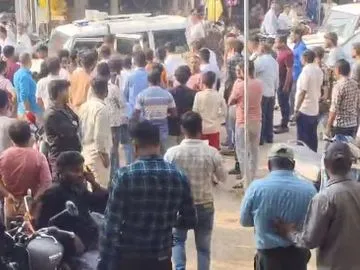
After receiving information about the incident, Dhanwar Police Station In-charge Brajesh Kumar reached the bank with his team. Khori Mahua SDPO Amarendra Kumar also arrived at the branch along with other police personnel and started an investigation.
Police are questioning bank employees and eyewitnesses to gather information about the robbery. They are also investigating the route taken by the criminals while escaping and other details related to the incident.
The robbery has raised serious concerns about security arrangements in the area, as the UCO Bank branch is located just around 200 metres from the Dhanwar police station. The fact that five armed criminals managed to carry out such a major robbery in broad daylight, so close to the police station, has raised questions about local security arrangements.
Temporary Employees Cannot Claim Continuation as a Matter of Right
The Andhra Pradesh High Court has held that temporary employees cannot claim continuation in service as a matter of right after their fixed tenure expires, even if their appointments have been extended repeatedly. The Court made the observation while dismissing a writ petition filed by 12 temporary employees of Sri Venkateswara University, Tirupati, who challenged the discontinuation of their services without prior notice or formal termination orders.
Justice Balaji Medamalli, sitting as a Single Judge, observed that the employees had been appointed only for fixed periods and that their temporary engagements did not give them an enforceable legal right to continue beyond the tenure mentioned in their appointment orders. The Court said that when a fixed period of engagement expires, the service comes to an end automatically with the passage of time. Such expiry cannot be treated as termination requiring compliance with the principles of natural justice.
However, the Registrar later orally instructed them not to report for duty. When the employees made enquiries, they learnt that the Registrar had received instructions from the Vice-Chancellor not to extend the engagements of daily-wage employees until further orders. As a result, the petitioners were discontinued from service.
Challenging the university’s decision, the 12 employees approached the High Court under Article 226 of the Constitution of India. This provision empowers High Courts to issue writs for the enforcement of legal rights. The petitioners argued that their services had been discontinued without prior notice, a formal termination order or an opportunity to be heard. They claimed that the action violated the principles of natural justice and their fundamental rights.
The employees also relied on the principle that an ad hoc employee should not be replaced by another ad hoc employee and should be replaced only by a regularly selected candidate appointed through the prescribed recruitment process. They argued that their repeated extensions and continued work supported their claim for protection against discontinuation.
The university opposed the petition and disputed the claim that the employees had been in continuous service. It submitted that each engagement was for a fresh fixed period of 89 days, followed by a break of one working day before the next engagement. According to the university, the appointments had been made outside the regular recruitment process, and the available workload was insufficient to justify permanent engagement. The university therefore decided not to grant further extensions.
All India Bank Strike on 30.11.2026:
All India Strike on 30.11.2026: SBI Sponsored RRBs Union Announced for 15 key demands.
SBI-sponsored Regional Rural Banks (RRBs) की Coordination Committee of Unions ने 30 November 2026 को सभी 9 SBI-sponsored RRBs में All India One-Day Strike का नोटिस जारी किया है। इसके अलावा, 1 November 2026 से SBI Life, SBI General, Mutual Funds सहित सभी Third-Party Products की बिक्री और Cross-Selling के पूर्ण बहिष्कार का आह्वान किया गया है।
यूनियनों ने SBI Management पर कर्मचारियों के साथ भेदभाव, Secondary Citizen Treatment, अनुचित Categorisation और Target-Based Sales Pressure जैसे गंभीर आरोप लगाए हैं।
15 प्रमुख मांगें (Charter of Demands):
1. RRB Categorisation: A, B, C Categorisation समाप्त कर समान सुविधाएं लागू हों।
2. Perquisite Tax: Staff Benefits पर मनमानी Tax Deduction बंद हो।
3. Insurance Orders: अनिवार्य Insurance Facilitator/Specified Person नियुक्ति आदेश वापस हों।
4. Manpower Autonomy: Manpower Policy में RRB Boards को पूर्ण स्वायत्तता मिले।
5. Recall of Deputed Officers: SBI के प्रतिनियुक्त Scale IV/V अधिकारियों की वापसी हो।
6. 12th BPS & 9th Joint Note: सभी प्रावधान पूरी तरह लागू हों।
7. Allowances & Welfare: Sponsor Bank के समान सभी Allowances और Staff Benefits मिलें।
8. Cross-Selling: Third-Party Sales Targets और AARF समाप्त हों।
9. Learning Tests: Mandatory Online Learning Tests एवं Marking बंद हो।
10. Ex-Servicemen: Seniority और Promotion में सेवा अवधि का लाभ मिले।
11. Transfer Policy: पारदर्शी Bilateral Transfer Policy लागू हो।
12. Welfare Fund: Staff Welfare Fund का वार्षिक आवंटन हो।
13. Conveyance Allowance: Sponsor Bank के समान Conveyance Allowance मिले।
14. Board Representation: RRB Boards, PF और Pension Trust में कर्मचारी प्रतिनिधित्व मिले।
15. Residual Issues: सभी लंबित Service Matters और Bipartite Entitlements का समाधान हो।
Programme of Agitation:
- Phase 1: From 5 October: Work-to-Rule एवं Non-Cooperation.
- Phase 2: From 1 November: Third-Party Products का पूर्ण बहिष्कार.
- Phase 3: On 30 November: All India One-Day Strike.
#RRBEmployees #AllIndiaStrike2026 #BankEmployeeIssues #BankingToday #rrb #BankStrike
Wednesday, November 4, 2026

Friday, October 30, 2026


DA increased by 3.50% for the quarter Nov'26 to Jan'27.
*DA increased by 3.50% for the quarter Nov'26 to Jan'27.*
*New DA will be.....*
*27.83+3.50=31.33%*
*Let us elaborate:*
CPI for Jul 2026 *--->* 153.2
CPI for Aug 2026 *--->* 154.4
CPI for Sep 2026 *--->* 155.5
Average CPI *---->* 154.36
*New DA from Nov'26*
= Average CPI-123.03
= 154.36 - 123.03
= *31.33%*✅
Wednesday, October 28, 2026

Tuesday, October 27, 2026
Top 10 Indian Banks with their Loans and Deposits of FY 2025-26.
Top 10 Indian Banks with their Loans and Deposits of FY 2025-26.
#BankingNews #BankingUpdate #SBIBank #HDFC #PNB #ICICIBank

Saturday, October 24, 2026
STOP BLAMING UFBU
STOP BLAMING UFBU
==================
The Wrestling Bout for updation of pension is over. The referee (Hon'ble SC) will declare the winner on the basis of facts and law placed before it.
What I emphasize is that we need the active support of the negotiating unions even if the judgement would be favourable.
Even if the SC holds the view that Reg. 35(1) provides for updation of pension, since no formula for updation of pension is prescribed in Appendix-I, it has to be provided for by way of an amendment, unless the SC gives a clear direction to update our pension as per the formula adopted in RBI.
Supreme court can not amend the statute. Hence there would be a need to negotiate and finalise the formula.
Because the UFBU represents the future pensioners, who are now in service, the formula for updation will have to be negotiated between IBA and UFBU to make it applicable to the future pensioners.
We would have no other go but to look at UFBU for updation of pension in the worst event of a negative decision by SC. IT WOULD REQUIRE A JOINT STRUGGLE BY UFBU AND THE RETIREES' UNIONS TO ACHIEVE PENSION UPDATION.
Therefore while waiting for the judgement let us stop blaming UFBU leadership. 🙏
Friday, October 23, 2026

Wednesday, October 14, 2026
IDBI BANK SOLD OUT 64%
IDBI BANK SOLD OUT
What actually happened today — *October 14, 2026*:
The Cabinet Committee on Economic Affairs (CCEA) approved the *strategic restructuring / sale of IDBI Bank to Canada's Fairfax Financial Holdings*:
- *Buyer:* M/s 10955230 Canada Inc, subsidiary of Fairfax Financial Holdings (Prem Watsa group)
- *Stake being sold: 60.72%* for *Rs 52,878 crore at Rs 81/share*
- Govt of India is selling *30.48%*
- LIC is selling *30.24%*
- *Govt is NOT selling its entire stake:*
- Govt will retain *15%*
- LIC will retain *19%*
- Together they still hold *34%*
- The govt has called it a "strategic restructuring" rather than a full disinvestment for this reason
- It is being termed the *largest-ever FDI in India's financial sector*, and the biggest disinvestment since Air India. 0057502b
Other conditions:
- Fairfax will have to make an open offer to minority shareholders
- Fairfax will have to reduce its stake from ∼60% to 26% (RBI promoter norm) over 15 years after a lock-in period
- It also has to exit / merge its existing 40% stake in CSB Bank
- The share purchase agreement is expected to be signed by end of FY26, subject to RBI approval
So IDBI will come under Canadian control, but Govt + LIC still remain as significant shareholders with 34% — it's not a 100% foreign-owned bank yet, and the deal is approved, not fully closed.
Subscribe to:
Posts (Atom)

-
Changes in leave rules for bank employees and Bank officers were updated in terms of the 12th BPS/9th Joint Note dated 08.03.2024 This post ...
-
Fixed personal pay is computerisation allowance. It was compensation given to the employees at that time. Not applicable for those who are j...
-
The Government of India has appointed Revenue Secretary Sanjay Malhotra as the new Governor of the Reserve Bank of India (RBI). Malhotra wil...
